
Ambition in Action - CV’s and Cover Letters
How Will This Session Help Me??
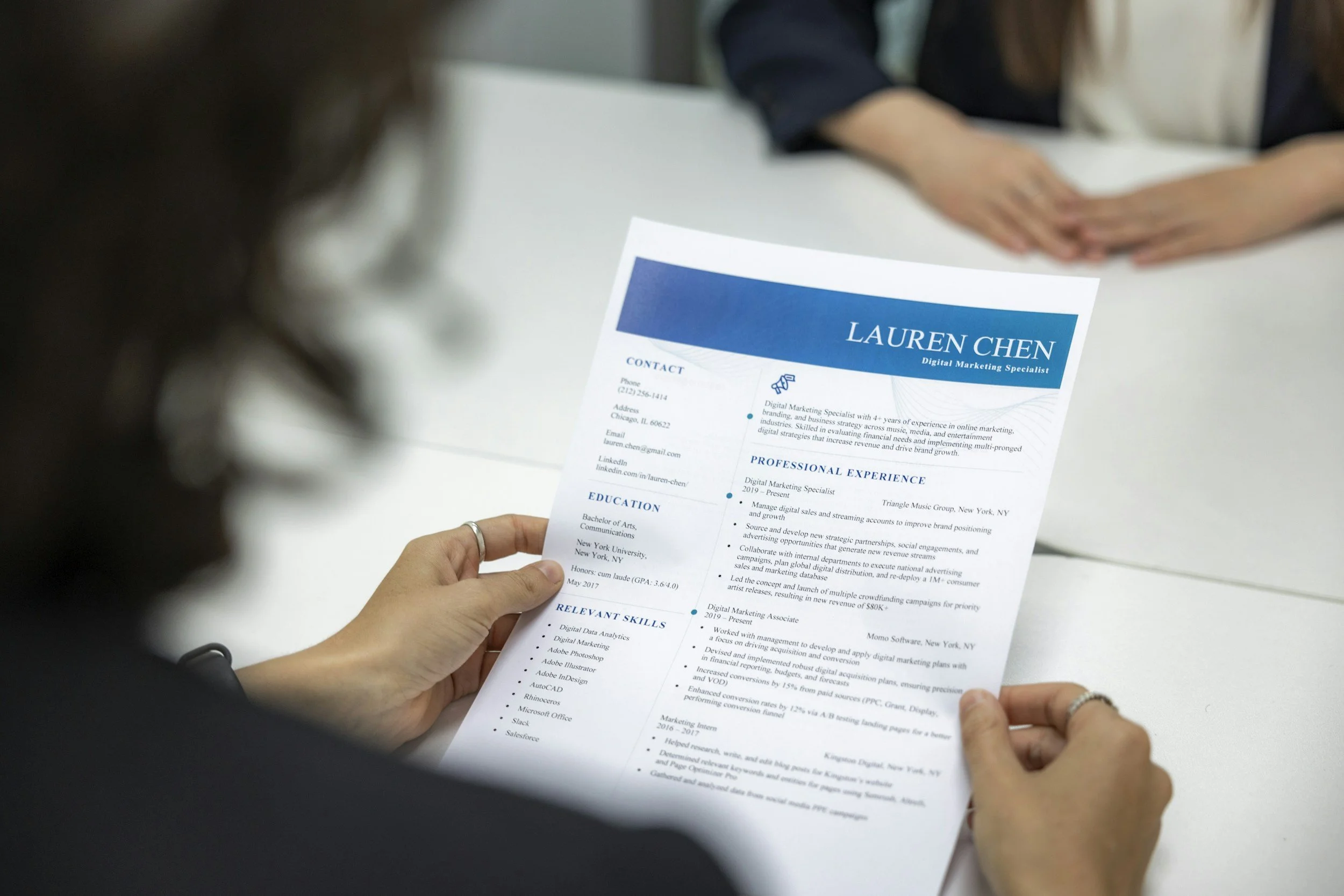
Most jobs require us to put our thoughts into writing. That might be filling in an application form, detailing our skills on a CV, or writing a cover letter to explain why we are right for a role. Many people find writing about themselves tricky or worry about using the wrong words, but with a few simple techniques, you can present your experience clearly, showcase your strengths with confidence, and make a brilliant first impression!
Questions to get started
Thinking about everyday life, when was a time you had to explain something to someone—like helping a family member, a customer, or a friend? How did you make sure they understood you?
When you hear the phrase "formal language," what kind of words or situations come to mind, and how is that different from how you talk to your friends?
If a close friend or family member asked you what your best quality or skill is, what would they say—and what is a real-life example of you using it?
Focused Virtues
The Focused Virtue for this session is Wisdom.
Wisdom gives us the insight to choose the right words when applying for a job, selecting formal language and clear examples so our strengths shine and our ambition is clear.
Ask Yourself: "Can I grow in wisdom to present my true value to employers?"
Reflect with care, write with confidence.

Skills Development:
Ambition in action - CV's and cover letters
When applying for your first job, writing a strong CV and cover letter takes true wisdom. Showing your ambition isn't about boasting—it is about thoughtfully picking the right details, choosing the correct tone, and proving your value to an employer.
First, demonstrate wisdom by using appropriate language. An application is a formal setting, so avoid informal slang or overly casual phrases. Write in clear, complete sentences to show respect and professionalism. Be careful with overly technical terms unless you are certain the manager reading your application shares that specific background; keeping your writing clear and direct ensures everyone understands your achievements.
Next, focus on highlighting your skills. Group your abilities into basic skills (like literacy and numeracy), essential transferable skills (like teamwork and problem-solving), and any technical skills you have picked up through school, hobbies, or volunteering. Reflect on your past experiences to show employers where your strengths lie.
Finally, back up every claim with facts and examples. Don't just say you are hard-working; give concrete evidence to prove it. A wise way to structure your bullet points or cover letter paragraphs is:
State your skill: "I have strong customer service skills..."
Provide facts: "...developed over six months volunteering at a local charity shop."
Give an example: "For instance, I regularly greeted visitors, managed the checkout, and helped resolve customer queries quickly."
By choosing the right formal language, clearly listing your skills, and providing real evidence, you will present your ambitions wisely and make a great impression on paper.
Case Studies and Questions
"Can you give an example of a skill you have and tell us about a time you used it in real life?"
"How do you change the way you communicate when speaking to a customer or manager compared to talking to a friend?"
Case Study
Alex is applying for a summer job at a local leisure centre. Alex has never had a paid job before, but spent six months volunteering at a local youth club, where they helped run the tuck shop, managed the weekly register, and helped calm down upset children.
In their cover letter, Alex wrote:
"I am really good with people and I'm very hard working. I want this job because I need the money."
How can Alex use their youth club volunteering experience to write a more formal, professional letter?

Guidance and Resources for Facilitators
Core Concepts & Background Information
The Structure of Persuasive Evidence (Facts & Examples) Communicating ambition effectively requires backing up claims with evidence. Help girls move away from vague self-praise ("I am really hard-working") by introducing structured evidence:
Facts and Statistics: Verifiable details that provide clear proof (e.g., spending six months volunteering, helping run a weekly youth club tuck shop, or managing a register).
Narrative Examples: Real-life stories that illustrate how a skill was applied. A strong example establishes the context (where), the people involved (who), the task or challenge (why), the action taken (how), and the positive outcome (what).
The Application Formula: Guide learners to structure their bullet points or cover letter sentences using the formula: [State Skill] because [Provide Facts]. For example, [Give Concrete Example].
Mastering Register (Appropriate Language) Choosing the correct language register shows respect for the setting and demonstrates maturity and professional awareness:
Informal Register: Casual language, abbreviations, and slang suited only for close friends or texting.
Formal Register: Clear, complete sentences with precise vocabulary, suitable for cover letters, CVs, and official applications.
Technical Register: Specific jargon related to a particular field. While technical terms show expertise, they need to be used well in the right context.
Categorising Personal Skills Skills are abilities that can be learned and improved over time. Help girls identify their capabilities across three distinct categories:
Basic Skills: Foundational abilities needed for daily study and work (literacy, numeracy, basic digital skills).
Essential Skills: Highly transferable core abilities such as communication, teamwork, creative problem-solving, and self-management.
Technical Skills: Specialised abilities required for specific tasks (e.g., managing a till, coding, operating equipment, or sports coaching).
Guiding Reflection & Overcoming Barriers
Overcoming the "I Don't Have Any Work Experience" Barrier
Reframing Strategy: Expand their definition of skill-building. Organizing their study, coordinating family activities, volunteering at a youth club or extracurricular clubs all build vital essential skills like time management, problem-solving, and leadership.
Prompting Reflection:
"Think about a busy week at school or home. What did you organise to make sure everything got done on time?"
"When was a time you had to explain something clearly to someone who was confused? How did you help them understand?"
Overcoming the Language and Register Gap
Reframing Strategy: Treat register selection as a practical communication tool rather than a test of vocabulary. Reframe formal language as a way to ensure their achievements are clearly understood and taken seriously.
Prompting Reflection:
"If you were telling a friend about helping out at a club, what words would you use? Now, how would you explain that same story to a headteacher or employer?"
"Look at Alex's sentence: 'I am really good with people.' How can we rewrite that in a formal sentence to show real customer service skills?"
Overcoming Modesty and the "Bragging" Barrier with Evidence
Reframing Strategy: Show girls that stating facts and examples removes the feeling of boasting. Stating a fact is not a brag—it is simply a truthful record of what happened.
Activity Idea (The Evidence Detective): Pair learners up. Ask Partner A to state one thing she is good at doing (e.g., "I am reliable"). Partner B acts as a detective and asks "What is the proof?" until Partner A provides a specific fact or story (e.g., "I arrived 10 minutes early for every youth club session last term").
Delivery Tips for the Session
Keep Vocabulary Concrete: Break down abstract terms like register into simple descriptions: "matching your words to the person you are speaking or writing to."
Use Side-by-Side Comparisons: Show simple, real-world contrast examples comparing informal sentences with formal, evidence-based sentences so girls can visually spot the difference.
Focus on Incremental Builds: Help girls build their cover letter or CV statements line by line using simple templates rather than overwhelming them with full document design all at once.